If you’ve ever stood next to an industrial scale that’s giving you inconsistent, off-kilter readings, there’s a good chance the problem isn’t the transmitter itself. I’ve been a weighing transmitter supplier for over a decade, and more times than I can count, I’ve walked a production floor to troubleshoot a “failed” transmitter only to find it installed in the worst possible spot—too close to a vibrating conveyor, too exposed to extreme temperature swings, or squeezed into a tight corner where no one bothered to check airflow. The good news is that optimizing a weighing transmitter’s installation position isn’t rocket science. It just requires a little attention to the unique demands of your environment and a clear understanding of what a transmitter actually does. For anyone working with these critical tools, getting the position right can be the difference between reliable, accurate measurements and costly downtime, reworked products, or even safety hazards. Weighing Transmitter
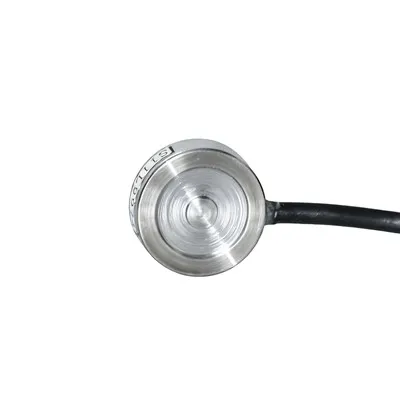
First, let’s quickly ground ourselves in why the transmitter’s location matters more than many people realize. A weighing transmitter is the brain of any load cell system: it takes the tiny electrical signal generated by a load cell (the part that sits under your vessel or platform and detects weight) and amplifies, filters, and converts that signal into a readable, usable output—whether that’s a 4-20mA signal to a PLC, a digital reading on a control screen, or a pulse count for batch processing. If that tiny, fragile signal gets corrupted before it reaches the transmitter, all your accuracy goes out the window. Even a 0.1% error in a signal can translate to hundreds of pounds of weight in a large hopper or a batch of raw material that’s off-spec. So the goal when choosing an installation position is twofold: protect the transmitter from external interference that warps that signal, and make sure it’s accessible for calibration, maintenance, and updates when needed.
Let’s start with the biggest threat to transmitter accuracy: vibration. I can’t stress this enough. Vibration is the number one culprit behind premature transmitter failure and erratic readings. I once worked with a food processing plant that had three identical scale systems all giving different readings. Turned out, they’d installed the transmitters on a steel beam right next to a high-speed packaging line. Every time the line ran, the beam vibrated, shaking the transmitter’s internal circuit boards loose and scrambling the signal. The fix was simple: move the transmitters to a non-vibrating surface, like a concrete wall or a separate mounting bracket anchored away from moving equipment. As a rule of thumb, if you can feel vibration on the surface where you’re thinking of mounting the transmitter, that spot is too close. Vibration doesn’t just damage hardware over time, either—it creates small, fast fluctuations in the load cell signal that the transmitter can’t filter out quickly enough, leading to readings that jump around by 10 or 20 pounds (or more) even when the weight is completely stable. If your facility has large pumps, compressors, conveyor belts, or mixers, you need to map their vibration patterns first. Even equipment that runs intermittently can throw off readings when it kicks on, so mark the areas on your floor or wall that show the least movement, and target those.
Next up: temperature extremes and humidity. Weighing transmitters are built to operate within specific temperature ranges—most industrial models handle between -40°F and 140°F, but that doesn’t mean they like sudden, dramatic swings. I’ve seen transmitters installed on the roof of a chemical plant, where midday sun pushed the internal temperature to 160°F and nighttime lows dropped it to 30°F. The constant expansion and contraction of the circuit board and internal components caused solder joints to crack over time, and the temperature changes also shifted the transmitter’s calibration. The result was readings that drifted 5% over a 24-hour period, which is completely unacceptable for precision weighing. The same goes for humidity. If you’re working in a washdown environment (like a food or pharmaceutical plant), mounting the transmitter where it’s exposed to direct spray from hoses will eventually cause corrosion. Water gets into the casing, eats away at the wiring connections, and leads to short circuits or signal drift. The solution here is to place the transmitter in a climate-controlled area if possible, or at least in a spot that’s shielded from direct temperature sources (heaters, AC vents, sunroofs) and direct moisture. If you have to mount it in an exposed area, look for transmitters with NEMA 4X or IP67 ratings, which are built to withstand dust and water, and always use a weatherproof mounting box to add an extra layer of protection.
Electrical interference, or EMI/RFI, is another hidden enemy. Most industrial facilities are full of devices that emit electromagnetic signals: variable frequency drives (VFDs) for motors, radio antennas, welding equipment, even other transmitters. These signals can interfere with the load cell’s low-level signal, making it impossible for the transmitter to get an accurate reading. I had a customer in the automotive parts industry who was using a scale to weigh metal castings for quality control. The transmitter would give random readings when the robot arm on the line moved, and after testing, we found the robot’s motor was emitting RFI that was leaking into the load cell cable, which ran right next to the robot’s power cable. The fix was two-fold: move the load cell cable to a separate conduit, at least 12 inches away from power cables, and relocate the transmitter away from the robot’s control box. Another common mistake is daisy-chaining multiple transmitters together or running load cell cables parallel to communication cables. Even small EMI can add up over long cable runs, so always keep load cell cables as short as possible, and never route them near high-voltage power lines or unshielded equipment. If you’re working in a particularly EMI-heavy environment, opt for a transmitter with built-in signal filtering, which is a feature many of our clients ask for when they’re operating in mills, refineries, or metal fabrication shops.
Accessibility is often overlooked, but it’s just as important as accuracy. A transmitter that’s hard to get to is a transmitter that won’t be calibrated or serviced on schedule, which leads to inaccurate readings and costly repairs down the line. I’ve walked into facilities where transmitters are squeezed behind a stack of pallets, 20 feet up a ladder, or inside a locked electrical cabinet that only one person has the key to. When calibration is due, technicians have to move equipment, ask for keys, or climb ladders, and they often skip it to save time. The result is a scale that’s out of calibration for months, leading to off-spec products or even safety issues (like an overloaded vessel that’s at risk of collapsing). When choosing a position, make sure there’s at least 18 inches of clearance around the transmitter for wiring access, calibration tools, and future upgrades. If it’s outdoors or on a high wall, add a step stool or a small platform so technicians can reach it safely without having to move heavy equipment. Also, avoid mounting transmitters near sharp edges or areas where they could be damaged by falling debris, forklifts, or passing personnel. Even a small dent in a transmitter’s casing can damage internal components, so prioritize positions that are out of the way of regular foot traffic and material handling.
We can’t forget about scale-specific factors either. The type of scale you’re using will also dictate the best transmitter position. For floor scales, the transmitter is often mounted on a wall near the scale, close enough to keep cable runs short but far enough away to avoid vibration from forklifts driving over the scale. For hopper scales, which are used in bulk material handling, the transmitter is usually mounted on a vertical support column next to the hopper, not on the hopper itself (which vibrates as material is added or mixed). For tank scales, the transmitter should be mounted on a separate structure from the tank, to avoid the movement and vibration of the tank as it’s filled. I once worked with a grain elevator that had their hopper scale transmitter mounted on the hopper’s discharge chute. Every time grain flowed out, the chute vibrated, making the transmitter jump by 500 pounds. Moving the transmitter to a fixed support 10 feet away solved that problem immediately. Also, for multi-cell scale systems (which use multiple load cells for large capacities), make sure the transmitter is positioned where all load cell cables can connect without crossing or stretching. Stretching or kinking load cell cables can damage the wiring over time, leading to signal loss.
Another thing to consider is the future. When you choose a position for your transmitter, you’re not just picking a spot for today—you’re picking one for the next 5, 10, even 15 years. If you’re planning to upgrade your scale system, add more capacity, or move equipment around in the future, leave extra space around the transmitter for future modifications. For example, if you might need to add a second scale or upgrade to a digital load cell system, make sure the transmitter has enough ports and space to accommodate extra wiring. Also, if you’re working in a growing facility, avoid mounting transmitters in areas that will soon be blocked by new equipment, storage, or construction. I’ve seen this mistake too many times: a plant expands, and the new storage blocks the transmitter access, leaving them to rewire the entire scale system just to reach it for calibration.
Let’s also talk about common mistakes I see suppliers and facility managers make all the time. One is installing the transmitter in the same enclosure as other electrical equipment, like relays or motor controls. As we talked about earlier, that leads to EMI interference. Another mistake is not using proper mounting hardware. Using a flimsy bracket that flexes can cause the transmitter to move slightly, leading to shifting readings. Always use heavy-duty, vibration-dampening mounting brackets specifically designed for weighing transmitters. And finally, not testing the position after installation. Even if you follow all the rules, every facility is different, so it’s important to test the scale’s readings after installing the transmitter in its new spot. Use a known weight (like a test weight or calibrated load) to verify the reading, and check for fluctuations over a period of time—run equipment nearby, turn off and on heaters or AC, test during different times of day when temperatures change—to make sure the position is stable.

At the end of the day, optimizing your weighing transmitter’s installation position is about protecting the signal that makes your scale accurate. It’s not a one-time task; you should review the position every time you move equipment, upgrade your process, or notice inconsistent readings. If you’re tired of dealing with erratic scale measurements, frequent transmitter failures, or costly downtime from calibration issues, the first step isn’t to replace your transmitter—it’s to double-check where it’s installed. We’ve helped hundreds of facilities fine-tune their transmitter positions, and in many cases, that simple adjustment cut their scale error by 70% or more, and extended the life of their transmitters by years. If you’re looking to improve the reliability of your weighing systems and want to work with a team that knows transmitters inside and out, reach out to us to discuss your specific facility needs and find the best installation solution for your operations.
Weighing Transmitter References
- O’Connor, T. (2020). Industrial Weighing Systems: Design, Installation, and Maintenance. CRC Press.
- Smith, J. D. (2018). Electromagnetic Compatibility for Industrial Instrumentation. ISA Press.
- National Institute of Standards and Technology (NIST). (2021). Handbook 44: Specifications, Tolerances, and Other Technical Requirements for Weighing and Measuring Devices. U.S. Department of Commerce.
- Weighing Instruments Manufacturers Association (WIMA). (2019). Best Practices for Weighing Transmitter Installation and Operation. WIMA Technical Report Series.
- Davis, R. H. (2022). Vibration Isolation for Industrial Automation Equipment. Industrial Press.
Yixing Silvanus Electric Manufacture Co., Ltd.
With abundant experience, we are one of the most professional weighing transmitter manufacturers and suppliers in China. We warmly welcome you to buy bulk advanced weighing transmitter in stock here and get pricelist from our factory. All customized products are with high quality and competitive price.
Address: No.30 Fukang Road, Xinjie Street, Wuxi, Jiangsu, China
E-mail: jacky@silvanus.cn
WebSite: https://www.kunsens.com/
