If you’ve ever stood in a facility where a gantry machining center is whirring through thick steel, aluminum, or titanium blocks, you’ve probably noticed a steady, subtle mist curling from the work zone—or the quiet hum of a pump circulating a clear, translucent fluid beneath the machine’s bed. For anyone who’s not deep in the machining industry, that fluid might look like a secondary afterthought, a trivial part of keeping the machine running. But as a gantry machining center supplier who’s spent 12 years troubleshooting, testing, and fine-tuning systems for clients ranging from aerospace part fabricators to heavy equipment manufacturers, I can tell you: the coolant system isn’t just part of the machine. It’s the backbone of every cut, the difference between a part that meets aerospace-grade tolerance and one that gets scrapped mid-production, and a key factor in how long a gantry will hold up through 10,000+ hours of use. Today, I want to break down exactly what this system does, why it matters for your operations, and how we design ours to solve the real pain points our clients face. Gantry Machining Center
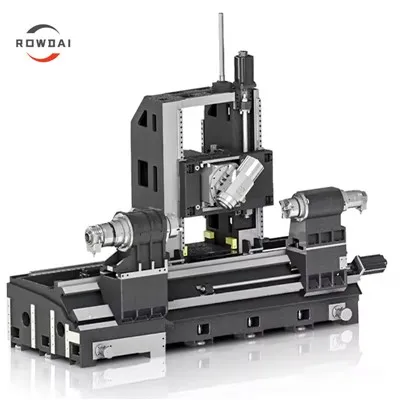
Let’s start with the basics, because a lot of operators I’ve worked with mix up “coolant” with “cutting oil” or “mist,” but gantry machining center coolant systems are a closed-loop, multi-component system purpose-built for large-format, high-torque machining—something critical because gantries are way bigger than standard vertical machining centers (VMCs). Where a VMC might have a work envelope of 1m x 1m x 0.5m, a gantry can span 10m across, mill parts that weigh tens of tons, and use tools with diameters up to 300mm that generate exponentially more heat than a smaller machine’s tiny end mill. The coolant system’s core jobs boil down to four non-negotiable functions: heat removal, chip evacuation, tool and workpiece lubrication, and corrosion control. Let’s dive into each, because skipping even one of these leads to avoidable downtime.
First, and most obvious: heat management. When you’re machining at 10,000 RPM with a 50mm carbide end mill cutting through 4340 alloy steel, the friction between the tool and the workpiece generates temperatures that can hit 1,200°C—hot enough to soften the cutting edge of the tool, warp thin-walled workpieces, and even distort the machine’s own structural components. Gantries are built with cast iron or steel frames for rigidity, but metal expands when heated, and even a 0.1mm shift in the spindle or linear rail over the course of a 12-hour production run can throw off tolerance by hundreds of microns—catastrophic when you’re machining a turbine blade that requires ±0.005mm precision. Our cooling systems circulate water-based or synthetic coolant at precise temperatures (we integrate temperature sensors that adjust flow in real time) to siphon that heat away before it can warp parts or degrade tooling. For example, a client in the oil and gas industry was machining 2m-long valve bodies from carbon steel using a competitor’s gantry; they were seeing 15% scrapped parts because the spindle heated up 2°C over the production run, shifting the cut depth. After switching to our gantries with our precision coolant system, that scrappage dropped to less than 1%, because we cycle coolant directly through the spindle itself (a feature we call “spindle through-coolant”)—so instead of just misting the tool from above, we push coolant through the center of the tool, where heat is generated most intensely, at 70 liters per minute. That keeps the spindle temperature stable within ±0.5°C, no matter how long the run.
Second, chip evacuation. When you cut metal, you don’t get nice, clean shavings—you get long, stringy chips that can wrap around the tool, jam the linear guides, or scratch the workpiece’s surface if they’re left in the work zone. For large gantry parts, these chips can be heavy and difficult to clear manually, which adds 2-3 hours of downtime per shift for some clients. The coolant system solves this by using high-flow, high-pressure pumps (we size these based on the work material: 50 bar for aluminum, 70 bar for steel, even 100 bar for titanium) to blast chips away from the cutting edge and flush them into the machine’s chip conveyor, which moves them to a collection bin at the back of the gantry. I saw this first-hand with a aerospace client machining 5m-long wing ribs from aluminum 7075; before our system, they had to stop every 90 minutes to clear chip clogs that caused tool breakage. With our high-pressure coolant, they can run a 16-hour shift without stopping for chip-related issues, and tool life on their roughing operations went up by 25% because chips aren’t rubbing against the tool edge. It’s a simple function, but one that cuts direct labor costs drastically.
Third, lubrication for tools and contact surfaces. Friction isn’t just a problem from heat—it wears down tools and machine components. The coolant system isn’t just water; we add a customized blend of corrosion inhibitors, extreme pressure (EP) additives, and lubricants tailored to the work material. When machining aluminum, we use a semi-synthetic coolant that’s gentle enough to avoid staining the soft metal but has enough lubricity to prevent built-up edge (BUE)—that gunk that forms on the tool edge when aluminum sticks, ruining surface finish. For titanium, which is notoriously difficult to machine because it generates high heat and tends to work-harden, we use a synthetic coolant with high EP additives that reduce tool wear by 40% compared to generic coolants. It’s not just for tools, either: the coolant mist (we also have through-rail lubrication in our gantries) lubricates the linear guides, ball screws, and spindle bearings, reducing friction and extending the life of those components by up to 50%—a huge win for a machine that costs six or seven figures, because replacing a spindle on a gantry can run $20,000+ in parts and labor.
Fourth, corrosion control. A gantry is a big, complex machine made of steel, cast iron, and sometimes aluminum. If you leave coolant sitting in the system for weeks, or if you use a generic coolant that doesn’t have the right inhibitors, it can cause rust on the linear rails, the worktable, or the internal pump components. Rust on a linear rail will cause uneven movement, leading to poor part accuracy, and that’s not something you can fix with a quick adjustment—you have to replace the rail, which takes days of downtime and costs tens of thousands of dollars. Our coolant systems have a closed-loop design (we filter coolant to remove metal chips and use a biocide to prevent bacterial growth, which breaks down coolant and causes odor and corrosion) so that we can extend coolant life to 2-3 years, and our system includes corrosion sensors that alert operators if the coolant’s pH level drifts outside the safe range, which is a common cause of rust. I’ve had clients tell us that after switching to our systems, they haven’t had to repair a rusted component in their gantry’s coolant system in 7 years of use—something that’s unheard of with cheaper, generic coolant systems.
Now, let’s talk about why this matters specifically for gantry machining centers, not VMCs or other machine tools. Gantries are designed for large, heavy parts, which means their coolant systems have to be bigger, more powerful, and more precise than smaller machines. A VMC might have a 10-liter coolant tank; our gantries have 200-500 liter tanks, because we need more coolant to handle the higher volumes needed for chip evacuation and heat removal. Gantries also have longer linear rails and larger spindles, so their coolant lines have to be sized to handle higher flow rates without pressure drops, which is something we engineer specifically for each gantry model. For example, our GMC-500 model, which is designed for 5m x 2m workpieces, has a 400-liter coolant tank with a 75 bar high-pressure pump, while our GMC-1000, built for 10m x 4m parts, has a 600-liter tank with a 100 bar pump—we don’t cut corners on sizing, because we know that under-sizing the coolant system is a common mistake that leads to poor performance.
I also want to address a common misconception I hear from new clients: “Can’t I just use a generic coolant system for my gantry?” The short answer is yes, but it will cost you more in the long run. A competitor might sell a gantry with a basic coolant system that’s adequate for light machining, but if you’re running heavy, high-torque cuts on steel or titanium, you’ll see higher scrappage, shorter tool life, more downtime for maintenance, and higher replacement costs for parts. I’ve had a client in the heavy construction industry who bought a gantry from a lesser-known supplier to save 10% on the initial cost; within two years, they’d spent more than double that amount on repairs for heat-related part distortion, tool replacements, and rusted components because their coolant system couldn’t handle their 24/7 production runs. When they switched to our gantries, their total cost of ownership dropped by 30% in the first three years, even though the initial cost was slightly higher. That’s the value of a well-designed coolant system—it’s not a line item you can skimp on, it’s an investment in your machine’s longevity and your production efficiency.
So how do we design our coolant systems to solve real-world problems? First, we customize the coolant blend for each client’s primary work material. If a shop runs mostly aluminum, we use a semi-synthetic coolant with aluminum-specific additives to prevent staining and BUE. If they run titanium, we switch to a synthetic coolant with high EP additives that resist heat and reduce tool wear. Second, we integrate spindle-through coolant for all our gantry models, which is the single biggest upgrade you can make for heat management. I can’t tell you how many clients tell us that adding spindle-through coolant to their existing gantry (even after they bought it from another supplier) cut their tooling costs by 20% within six months. Third, we build closed-loop systems with automatic filtration and pH monitoring, so operators don’t have to manually test and change coolant as often, which saves labor time and reduces coolant waste. Finally, we test every coolant system in our in-house machining lab before it leaves our facility—we run 100-hour production runs with simulated heavy cuts to make sure the temperature stays stable, pressure is consistent, and chips are evacuated properly, so our clients don’t have to work out the kinks themselves.
If you’re in the market for a gantry machining center, or you’re looking to upgrade your existing system to reduce downtime and scrappage, the coolant system is one of the most important things to ask about when evaluating suppliers. Don’t just ask “does it have a coolant system?”—ask about the flow rate, pressure, spindle-through capability, coolant blend customization, and maintenance requirements. Ask for references from clients who machine the same materials you do, and ask them about their experience with the coolant system. At the end of the day, the best gantry in the world is useless if its coolant system can’t keep up with your production demands.
If you’re ready to learn how our gantry machining centers with purpose-built coolant systems can lower your costs and improve your production efficiency, reach out to our team to discuss your specific needs. We’ll walk you through the design, answer all your questions, and help you find the right solution for your shop.
Cylindrical Grinding Machine References:
- Manufacturing Engineering and Technology, Kalpakjian S., Schmid S.R.
- Machining Fundamentals, Workman J.
- Gantry Machining Center Design and Performance Optimization, Industrial Machining Association Technical Report 2021
- Metalworking Coolants: Selection and Application, Society of Manufacturing Engineers (SME) 2019
Henan Rowdai Machinery Equipment Co., Ltd.
As one of the most professional gantry machining center manufacturers in China, we’re featured by quality products and good price. Please rest assured to buy high-grade gantry machining center for sale here from our factory. If you have any enquiry about cooperation, please feel free to email us.
Address: Building 9, E-Commerce Industrial Park, High-Tech Zone, Zhengzhou, Henan, China
E-mail: rowdai@rowdai.com
WebSite: https://www.rowdai.com/
