As a safety cable supplier, I’ve often been asked about the electrical conductivity of safety cables. It’s a crucial aspect that directly impacts the safety and functionality of these cables in various applications. In this blog post, I’ll delve into the concept of electrical conductivity in safety cables, exploring what it means, why it matters, and how we ensure our safety cables meet the highest standards. Safety Cable

Understanding Electrical Conductivity
Electrical conductivity is a measure of a material’s ability to conduct an electric current. It is the reciprocal of electrical resistivity, which is a measure of how strongly a material opposes the flow of electric current. Conductivity is typically expressed in siemens per meter (S/m) in the International System of Units (SI).
In the context of safety cables, electrical conductivity is essential for several reasons. First and foremost, safety cables are often used to provide a path for electrical current in the event of a fault or short – circuit. This helps to prevent the build – up of dangerous electrical charges and reduces the risk of electrical shock, fires, and other hazards.
For example, in industrial settings, safety cables may be used to ground electrical equipment. When a fault occurs in the equipment, the electrical current can flow through the safety cable to the ground, protecting workers and preventing damage to the equipment. In this case, a high electrical conductivity in the safety cable ensures a low – resistance path for the current, allowing it to quickly dissipate.
Factors Affecting the Electrical Conductivity of Safety Cables
Several factors can affect the electrical conductivity of safety cables. The material used in the cable is one of the most significant factors. Different materials have different inherent electrical conductivities.
- Copper: Copper is one of the most widely used materials in safety cables due to its excellent electrical conductivity. It has a high number of free electrons that can move easily through the material, allowing electric current to flow with relatively low resistance. The electrical conductivity of pure copper at 20°C is approximately 58 × 10⁶ S/m.
- Aluminum: Aluminum is another material commonly used in cables. While its electrical conductivity is lower than that of copper (approximately 37.7 × 10⁶ S/m at 20°C), it is lighter and less expensive. In some applications where weight and cost are critical factors, aluminum may be a preferred choice.
The cross – sectional area of the cable also plays a crucial role. According to Ohm’s law, the resistance of a conductor is inversely proportional to its cross – sectional area. A larger cross – sectional area means less resistance and higher conductivity. For example, a safety cable with a thicker conductor will be able to carry a larger electrical current with less voltage drop compared to a cable with a thinner conductor.
The temperature can also impact the electrical conductivity of a safety cable. In general, the resistance of most conductors increases with an increase in temperature. This is because as the temperature rises, the atoms in the conductor vibrate more vigorously, which makes it more difficult for the free electrons to move through the material. Therefore, in high – temperature environments, the electrical conductivity of a safety cable may decrease.
Measuring the Electrical Conductivity of Safety Cables
To ensure the quality and performance of our safety cables, we use a variety of methods to measure their electrical conductivity. One common method is the four – point probe technique. In this method, four probes are placed in contact with the cable conductor. A current is passed through the outer two probes, and the voltage is measured across the inner two probes. Using Ohm’s law (R = V/I), the resistance of the conductor can be calculated, and from the resistance, the conductivity can be determined based on the known dimensions of the conductor.
We also conduct regular quality control tests on our safety cables. These tests involve checking the cable’s electrical properties at different temperatures, humidity levels, and under various mechanical stresses. By subjecting the cables to these tests, we can ensure that they will perform reliably in real – world applications.
Importance of High – Quality Conductivity in Safety Cables
High – quality electrical conductivity in safety cables is of utmost importance for maintaining safety in various industries. In the power generation and distribution industry, safety cables with low resistance and high conductivity are essential for transmitting electrical power efficiently. A small increase in resistance can result in significant power losses, which not only waste energy but can also lead to overheating of the cables, increasing the risk of fire.
In the automotive industry, safety cables are used in electrical systems to ensure the proper functioning of various components. A cable with poor electrical conductivity can cause malfunctions in critical systems such as the engine control unit, airbag system, or lighting system. This can compromise the safety and reliability of the vehicle.
In the construction industry, safety cables are used for grounding electrical systems in buildings. A well – conducting safety cable ensures that any electrical faults are quickly and safely diverted to the ground, protecting the building’s occupants from electrical shock.
Our Commitment as a Safety Cable Supplier
As a safety cable supplier, we are committed to providing our customers with safety cables that have excellent electrical conductivity. We use only high – quality materials in the production of our cables. Our copper conductors are made from pure, high – grade copper, and our aluminum conductors are carefully selected for their conductivity and durability.
In addition to using high – quality materials, we have a strict quality control process in place. Every batch of safety cables undergoes rigorous testing to ensure that it meets or exceeds industry standards for electrical conductivity. We also invest in research and development to continuously improve the performance of our cables.
We understand that different applications have different requirements for electrical conductivity. That’s why we offer a wide range of safety cables with varying conductivities to meet the specific needs of our customers. Whether it’s a high – voltage power transmission application that requires extremely low resistance or a low – voltage control circuit that needs a more cost – effective solution, we have the right safety cable for the job.
Conclusion
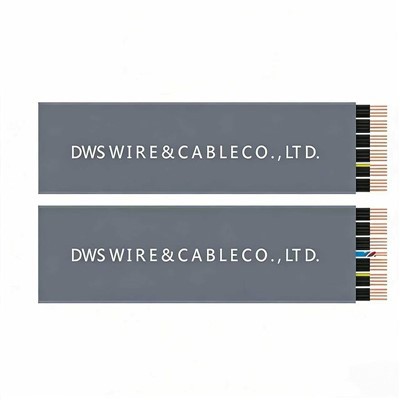
The electrical conductivity of a safety cable is a critical factor that determines its effectiveness in preventing electrical hazards and ensuring the proper functioning of electrical systems. As a safety cable supplier, we take pride in providing our customers with high – quality safety cables that offer excellent electrical conductivity.
Load Bank Cables If you are in the market for safety cables and want to learn more about our products or discuss your specific requirements, we encourage you to contact us. Our team of experts is ready to assist you in finding the right safety cable solution for your application. We look forward to the opportunity to work with you and help you ensure the safety and reliability of your electrical systems.
References
- Halliday, D., Resnick, R., & Walker, J. (2014). Fundamentals of Physics. Wiley.
- Groover, M. P. (2010). Fundamentals of Modern Manufacturing: Materials, Processes, and Systems. Wiley.
- Fitzgerald, A. E., Kingsley, C., Jr., & Umans, S. D. (2003). Electric Machinery. McGraw – Hill.
Cixi Davos Wire & Cable Co., Ltd.
As one of the most professional safety cable manufacturers and suppliers in China, we also support customized service. Please feel free to buy bulk high quality safety cable in stock here from our factory. For price consultation, contact us.
Address: No.3, Lane 91, Ruan Ding Road, Linxi Village, Xiaolin Town, Cixi City
E-mail: roy798@163.com
WebSite: https://www.cj-supplychain.com/
